



For years, leaders believed artificial intelligence would liberate them from human error. They are now discovering it can automate and amplify bias at a terrifying scale. Why the C-suite’s newest systemic risk has moved from the CHRO’s desk to the General Counsel’s
Words by Karan Karayi
For a decade, the algorithm was the answer. It was the shimmering, objective tool that would finally sand away the ingrained, inefficient, and often irrational biases of human judgment. We were told that AI would hire the best candidate, approve the most deserving loan, and create a perfectly meritocratic, ruthlessly efficient enterprise.
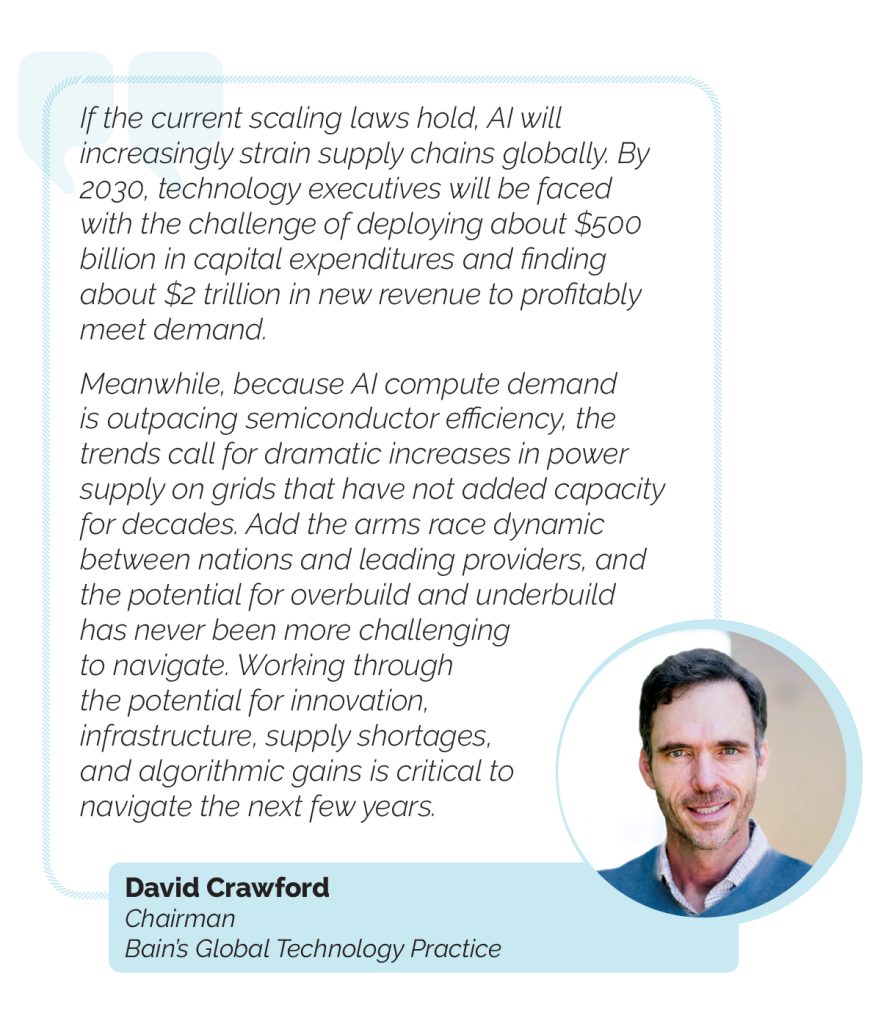
Business leaders, eager for a competitive edge, poured capital into this digital dream. AI-related spending is soaring worldwide, expected to reach approximately $1.5 trillion by 2025, according to US research firm Gartner, and over $2 trillion in 2026 — nearly 2 percent of global GDP. McKinsey & Co. anticipates the bill will exceed $5 trillion by 2030.
Two trillion dollars in annual revenue is what’s needed to fund computing power needed to meet anticipated AI demand by 2030. However, even with AI-related savings, the world is still $800 billion short to keep pace with demand, new research by Bain & Company finds.
The goal? To build a smarter, faster, and, it was assumed, fairer organization.
That dream is now defaulting. The headlines have become a drumbeat of technological failure, not of code, but of conscience. We have seen AI-powered hiring tools that penalize resumes containing the word “women’s.” We have seen facial recognition systems that are up to 100 times more likely to misidentify non-white faces. And we have seen healthcare algorithms that systemically deprioritize minority patients for critical medical care.
For a long time, these failures were siloed. A biased hiring tool was seen as a problem for the Chief Human Resources Officer (CHRO) and the diversity team. A flawed product feature was a headache for the Chief Technology Officer. But a fundamental shift has occurred. The algorithmic failures are no longer isolated incidents; they are evidence of a new, systemic, and deeply expensive liability.
The conversation about “ethical AI” has decisively moved from the corporate social responsibility report to the quarterly risk filing. This is no longer a philosophical debate. It is a material, balance-sheet issue that has become the urgent, shared priority of the Chief Financial Officer and the General Counsel.
The age of algorithmic innocence is over.
The New Price of Prejudice
For the CFO, any unquantified risk is a threat to stability. AI, once a tool for mitigating risk, has become a primary source of it. The financial penalties for algorithmic prejudice are no longer theoretical.
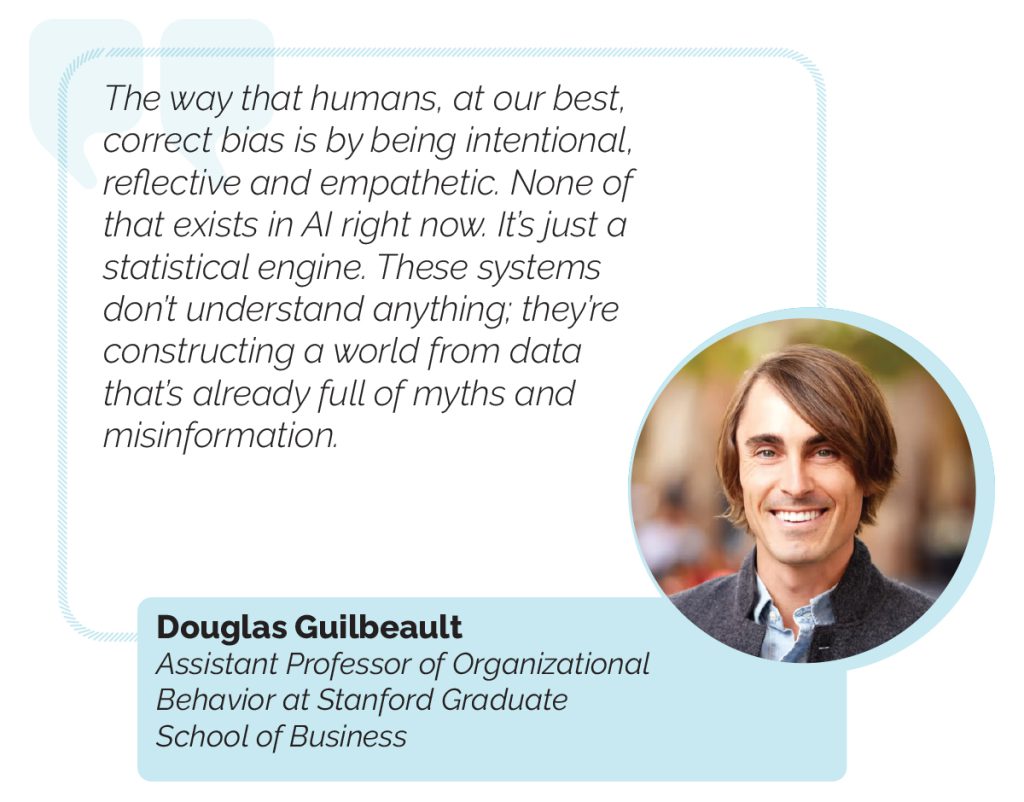
Consider the cost of failure. According to a 2023 report from Accenture, companies that champion and demonstrably scale “Responsible AI” see revenue growth that is 5.9 percentage points higher than their peers. The inverse is also true: laggards are not just standing still; they are actively losing market share. This is the new “inclusion dividend,” and it is measured in red ink.
When Goldman Sachs faced a regulatory probe into its Apple Card algorithm for alleged gender discrimination in setting credit limits, the cost was not just in potential fines. It was in the tens of millions spent on internal audits, legal fees, and the corrosive damage to a flagship, consumer-facing product. The reputational fallout was immediate, but the balance-sheet impact was a slow burn, measured in eroded trust and customer churn.
Venture capital poured over $50 billion into generative AI in 2024 alone. Yet a significant portion of this capital is at risk, not from failed technology, but from failed adoption. An MIT Sloan review noted that the single greatest barrier to AI adoption is not cost or technical skill, but a profound lack of organizational trust.
When employees do not trust the tools they are given—believing them to be unfair or inaccurate—they create shadow systems, revert to old workflows, and destroy any potential return on investment. The CFO, therefore, must now ask not just “What will this AI system save us?” but “What could this AI system cost us if it is built on flawed, biased data?”
Slack’s 2024 global survey of more than 17,000 office workers found that 61% of employees had spent less than five hours learning about AI and 30% had received no training at all.
This financial risk extends to the CHRO’s domain. The war for talent is now fought on the battlefield of culture and values. A 2024 survey by Edelman found that 68% of employees globally expect their CEO to take a public stand on ethical technology. When a company is publicly exposed for using a discriminatory AI hiring tool, the reputational cost is catastrophic. It repels the very high-value, diverse talent it was supposed to attract, leading to higher recruitment costs and lower innovation. The CHRO and CFO are now joined at the hip: a biased culture is an expensive culture.

Algorithms in the Dock
If the financial risk is a slow burn, the legal risk is a wildfire. The regulator’s patience has finally snapped. Around the world, a new iron curtain of algorithmic regulation is descending, and the “black box” is no longer a viable legal defense.
The most formidable example is the European Union’s AI Act. It is the global standard-setter, and its reach is extraterritorial. The Act creates a risk-based hierarchy, labeling systems used in employment, lending, and critical infrastructure as “high-risk.” For these systems, the law demands non-negotiable transparency, human-in-the-loop oversight, and rigorous bias testing before they are deployed. The penalties for non-compliance are designed to make the CFO sit up straight: fines can reach up to €35 million or 7% of global annual turnover, whichever is higher. For a tech giant, this is a multi-billion dollar liability.
The General Counsel’s office, once concerned with patents and contracts, must now employ data scientists.
This regulatory fire is spreading. In the United States, New York City’s Local Law 144 now mandates that any company using an “Automated Employment Decision Tool” (AEDT) must subject that tool to an independent, annual bias audit and make the results public. This law effectively punctures the “black box” defense for good. It is no longer enough to say, “We bought the software from a vendor.” The liability rests with the user.
In India, the Digital Personal Data Protection (DPDP) Act has established a similar beachhead. While not explicitly an “AI bias” law, it imposes severe penalties for data misuse. Since biased AI is born from flawed or improperly sourced data, the DPDP Act gives regulators a powerful stick.
The legal jeopardy does not end with regulators. We are now seeing the rise of shareholder class-action lawsuits arguing that a failure to audit for AI bias constitutes a material governance failure and a breach of fiduciary duty. The General Counsel must now prove that the company has performed its due diligence, not just on its finances, but on its algorithms.
Resilience: The Only Response
What, then, is to be done? This is not an IT problem to be patched; it is a business strategy to be rewritten. The solution is not to stop using AI, which would be tantamount to unilateral disarmament. The solution is to recognize that Equitable AI is the only form of Resilient AI.
This strategic pivot requires a new C-suite compact.
First, it reframes the role of the CHRO and the Chief Diversity Officer. For decades, DEI (Diversity, Equity, and Inclusion) has been treated as a “cultural” or “HR” initiative. This is now dangerously obsolete. DEI is a critical input for data science.
Research from BCG has long shown that companies with more diverse management teams report 19 percentage points higher innovation revenue. This same logic applies directly to AI. A homogenous engineering team is statistically incapable of spotting the biases that will harm a diverse customer base. The CHRO’s primary role in this new era is to ensure that the teams building the AI are as diverse as the populations it will serve.
Second, it redefines the job of the General Counsel. Legal oversight can no longer be a checklist applied at the end of the process. The GC’s office must be embedded in the AI design phase. “Compliance by design” means asking about fairness, auditability, and transparency from day one, not day one hundred. The GC must move from a reactive “no” to a proactive “how,” building the governance frameworks that make ethical AI possible.
Finally, it gives the CFO a new, critical metric. The return on investment (ROI) for any new AI project must now include a “Return on Fairness” (ROF). The CFO must demand a bias and risk audit as part of the capital expenditure request. This simple step forces the organization to quantify the potential liability, be it legal, financial, or reputational, before a single line of code is written.
For a generation, our organizations have been run on human intuition, supported by data. We are now building organizations run by data, supposedly supported by human intuition. But if that data is flawed, if the logic is prejudiced, the entire enterprise becomes fragile. The most resilient organizations of the next decade will not be those that deploy AI the fastest, but those that deploy it the fairest. The algorithm’s albatross is heavy, and it can only be removed by embedding human equity at the very center of the system.