



Shrimati Shweta Shalini, BJP Leader, offers a candid look at the challenges of governance, the “Boys’ Club” of politics, and the infrastructure-led vision for a developed state.
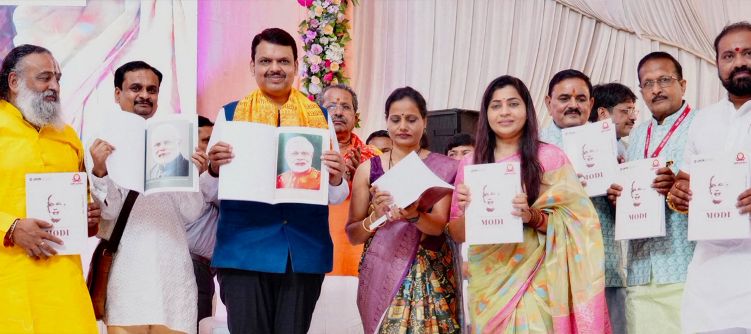
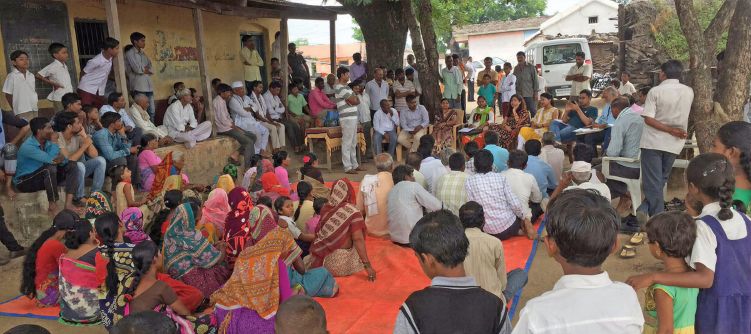
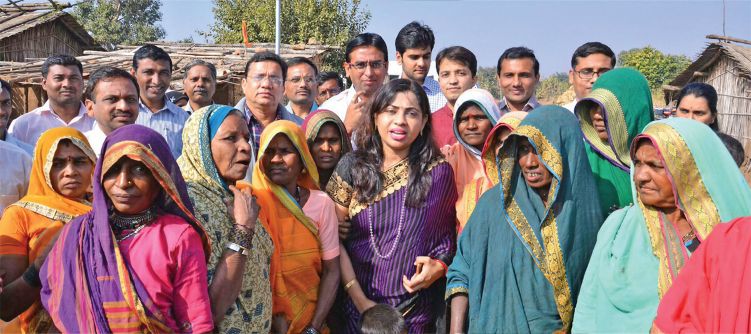
In the complex tapestry of Indian politics, governance is rarely a linear equation. It is a constant negotiation between legacy challenges and future ambitions. For Shweta Shalini, a corporate leader turned political strategist and current BJP leader, the journey is about dismantling silos, both in government infrastructure and in gender perception.
Speaking exclusively, Smt. Shalini outlined a governance landscape that is grappling with modern, unconventional threats. She highlighted “Urban Naxalism” as a critical, often invisible challenge, noting that cities like Pune have become recruiting grounds for radical ideologies, targeting the youth. The state’s response—a robust public safety act—is part of a broader strategy to secure the urban environment while simultaneously addressing the root causes of unrest in areas like Gadchiroli through development and employment.
But perhaps the most unique insight Shalini brings from her corporate background is the “silo mentality” within the government itself. “Often, one ministry doesn’t talk to another,” she observed. She described the classic bureaucratic inefficiency where one agency lays a road, only for another to dig it up the next day for a pipeline.
To combat this, the state has implemented a “War Room” approach—a centralized command center that forces 17 different agencies to coordinate, ensuring that infrastructure projects like the Samruddhi Mahamarg expressway are delivered seamlessly. This focus on “infrastructure-led growth” is designed to connect the disparate regions of Marathwada, Vidarbha, and Western Maharashtra, ensuring that development is not just a Mumbai story, but a state-wide reality.
However, the conversation took a deeply personal turn when addressing the role of women in this high-stakes environment. Shalini did not mince words: “Politics is a Boys’ Club.”
She articulated the psychological tightrope that women leaders must walk. “Every time I am assertive, I am told that I am aggressive. Every time I have a question, people feel that I am challenging,” she shared. This perception gap is a systemic hurdle. While a quiet man is seen as a thinker, a quiet woman is often dismissed as weak. Shalini argued that breaking this paradigm requires more than just resilience from women; it requires active allyship from men. “We need men to walk with us,” she urged, emphasizing that a balanced society (and by extension, a balanced government) cannot be built by one gender alone.
For the youth looking to participate, Shalini’s advice was pragmatic. Governance today is digital. She called for a shift from the traditional Public-Private Partnership (PPP) to a “Public-Private-People Partnership” (PPPP). She urged young people to move beyond social media commentary and actively engage with policy drafts available online. “Read the policy document. Register your opinion,” she advised. In an era of hackathons and the Atal Innovation Mission, the tools for nation-building are in the hands of the youth, but the will to use them must come from within.
As Maharashtra pushes towards becoming a trillion-dollar economy, leaders like Smt. Shalini represent a new breed of governance: data-driven, infrastructure-focused, and unapologetically assertive in carving out space for women at the decision-making table. The road ahead is long, but the blueprint is clear.