


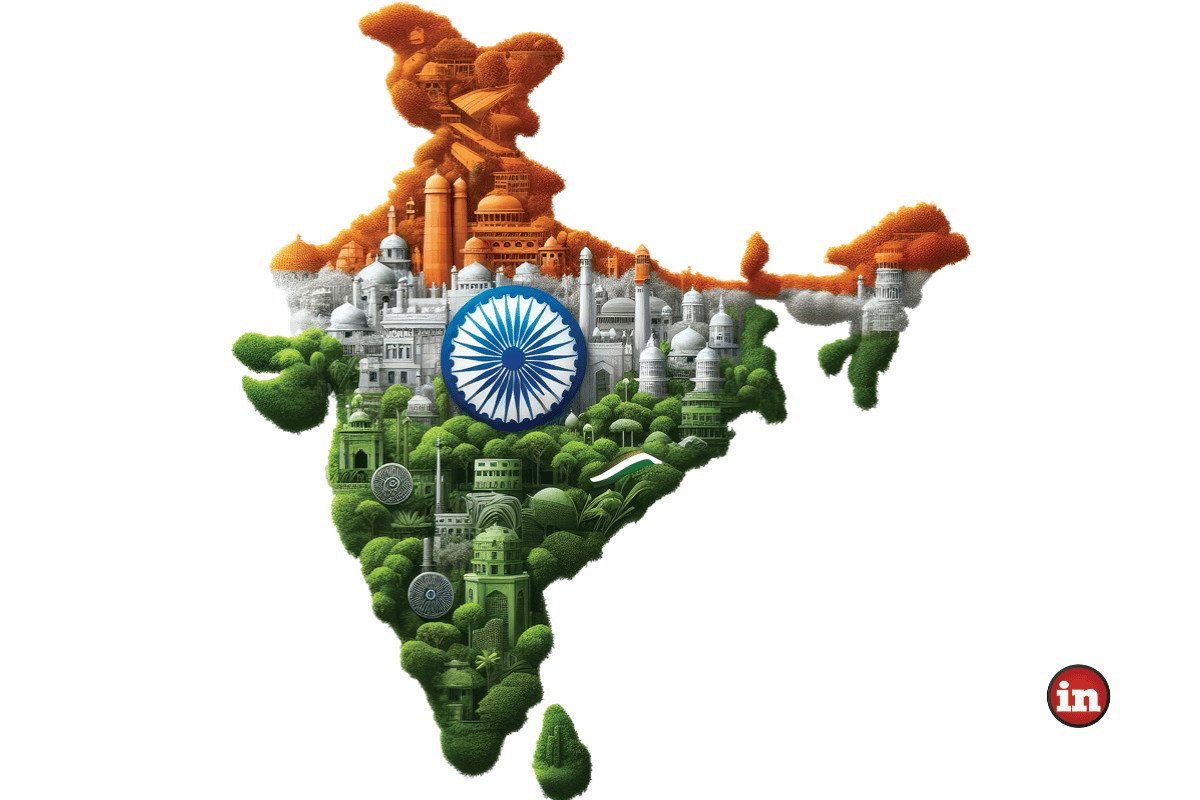
A new generation of doers are reimagining what the Great Indian Dream might really mean
For a long time, the Indian dream had a fairly predictable geography. Build a good education. Get a good job. Perhaps start a company. Build it into something substantial. Make it successful in India. The world, in this version of the story, was somewhere else. That is changing.
A new generation of Indian entrepreneurs is beginning with a different assumption: that a company can be conceived in Bengaluru, Hyderabad, Gurugram, or Chennai, and that it can be engineered in India, funded by global capital, and sold to customers anywhere in the world.
The ambition is not simply to make an Indian version of something that already exists. It is to build things that the world needs, and to build them from India. That shift is visible in rockets and satellites, precision machines, defence systems, semiconductor technology, and consumer brands. It is also visible in the people behind them: founders who are often less interested in becoming the next Indian unicorn than in becoming the first Indian company in a particular global category.
They are, in their different ways, writing a new chapter of the Indian dream.
Pawan Kumar Chandana: The rocket scientist who stopped waiting for space
When Pawan Kumar Chandana and Naga Bharath Daka founded Skyroot Aerospace in 2018, India’s private space industry barely existed.
The two former ISRO engineers were not merely starting another technology company. They were attempting something that had traditionally belonged to governments: building an orbital rocket.
Eight years later, the ambition looks considerably less improbable. Skyroot became India’s first space-tech unicorn in May 2026, after raising about $60 million at a pre-money valuation of $1.1 billion. Its Vikram-1 rocket subsequently made history on July 18 by becoming the first privately developed Indian rocket to successfully reach orbit from Indian soil.
The more revealing number, however, is not the valuation. Skyroot says it has more than 1,000 people working across engineering, operations, and business, and that roughly one-third of expected demand for its launches is from India, with the rest coming from international customers. Its next vehicle, Vikram-2, is being designed to carry substantially larger payloads.
That is a subtle but important change in India’s entrepreneurial psychology. Chandana is not building a rocket because India needs an Indian rocket.He is building one because there is a global market for launching things into space, and he believes an Indian company can compete in it.
This is no mere moonshot. India’s space economy is estimated at about $8.4 billion and the government expects it to reach $44 billion by 2033. But the real prize is not merely a larger domestic industry. It is Indian companies capturing a share of a global one as the Indian dream looks upward
The new Indian dream, in other words, has begun to look upward.
Anirudh Sharma: Putting Indian eyes in orbit
If Chandana is trying to make space accessible, Anirudh Sharma is trying to make it observable.
Sharma is co-founder and CEO of Digantara, a Bengaluru space-intelligence company that began by tracking orbital debris and is now building technology for space surveillance and missile detection.
Its ambitions have moved rapidly. In December 2025, Digantara raised $50 million in a funding round that valued the company at roughly $200 million. It has contracts or operations spanning India, Singapore, the US, and other markets, and is expanding into missile tracking and defence applications.
For the year ended March 2026, Sharma told Forbes that Digantara generated about $5 million in annual revenue, roughly 80% of it from government customers. He expects the business to reach approximately $50 million in revenue and become EBITDA-positive by FY2028.
The numbers are still small by the standards of India’s largest technology companies. The ambition is anything but. Digantara is competing in a field populated by American defence giants, while simultaneously establishing a US presence and developing technology for international customers. Its space camera can track objects as small as five centimetres, according to the company.
That is the new Indian dream in miniature: a company born in Bengaluru, solving a problem that did not originate in India, for customers who may never set foot in India.
Ananth Narayanan: Building brands without waiting for the world to notice
The global Indian company does not necessarily have to manufacture rockets. It might sell skincare, apparel, or consumer products.
Ananth Narayanan is betting that India can produce the next generation of global consumer brands. His company, BRND.ME, has evolved from the roll-up model associated with Mensa Brands into a technology-led house of brands with an annual revenue run rate of roughly $200 million, and is EBITDA profitable.
That is interesting not simply because of the scale. It is because Narayanan is attacking one of India’s oldest weaknesses: the country’s difficulty in creating consumer brands with genuine international recognition. India has produced global technology companies, pharmaceutical businesses, and services giants. Its consumer brands, however, have historically had a harder time crossing borders. Narayanan sees that changing.
In an interview earlier this year with a media outlet, he described a roughly 20-year opportunity for Indian consumer brands to expand globally, helped by changing geopolitics, new trade arrangements, technology, and the growing sophistication of Indian companies.
There is a confidence embedded in that thesis. The old question was: Can an Indian brand succeed overseas? The new one is: Which markets should an Indian brand enter first?
That also reflects a broader evolution in India’s consumer economy. Indian companies increasingly have access to sophisticated digital marketing, global logistics, cross-border payments, data-driven customer acquisition, and manufacturing ecosystems capable of producing at international standards.
The next challenge is not learning how to make things. It is learning how to make the world want them.
Kaushik Mudda: Making the machines that make everything else
Perhaps the most consequential entrepreneurs of the new Indian economy are those whose products are almost invisible. Kaushik Mudda, co-founder and CEO of Bengaluru-based Ethereal Machines, falls into that category.
His company designs and manufactures multi-axis CNC machines and operates a Machining-as-a-Service business that produces precision components for aerospace, defence, healthcare, semiconductors, and consumer electronics.
In June, Ethereal raised $28.5 million in a Series B round. Since its previous $13 million round, the company says its Machining-as-a-Service revenue has grown threefold year on year, while production capacity has increased tenfold. It plans to build a 300,000-square-foot manufacturing facility near Bengaluru, develop India’s first indigenous multi-axis CNC controller, and establish teams in the US and Europe.
This is perhaps a more profound expression of India’s industrial ambition than another consumer app. For decades, India had extraordinary engineering talent but remained dependent on imported machine tools and industrial technology. Ethereal is attempting to change that equation from the bottom up.
Its ambition is not simply to manufacture in India. It is to build the manufacturing technology itself. That is what makes Mudda’s story particularly relevant to the next Indian dream. The country’s opportunity is not just to become another factory floor for the world. It is to own more of the technology, intellectual property, and productive infrastructure behind that factory floor.
The company’s expansion into the US and Europe makes the intention explicit. The machine is Indian. The customer can be anywhere.
The dream changes
These four entrepreneurs have little in common on the surface.
One launches rockets. One builds consumer brands. One makes industrial machines. One watches the orbital environment.
But underneath them is the same wager. India no longer has to choose between being a large market and being a global producer. It can be both. And the numbers suggest that the ecosystem is beginning to support that belief. Government-backed semiconductor programmes have approved 10 projects involving envisaged investments of about ₹1.6 lakh crore, while Indian semiconductor startups backed by the Design Linked Incentive scheme have collectively raised more than $100 million and recorded 35 tape-outs.
Yet the more important transformation is psychological. The entrepreneur starting a company in 2026 does not necessarily dream of building India’s version of an American, Chinese, or European company. He or she increasingly dreams of building the company that an American, Chinese, or European customer will have to deal with.
That is a subtle but profound shift. It does not mean India has solved the difficult problems of productivity, capital, skills, infrastructure, regulation, or scale. It has not. Nor does every ambitious startup become a global company. Many will fail, and some of today’s most exciting valuations will eventually look optimistic.
But that is precisely why these stories matter. Confidence is not the belief that failure is impossible. It is the willingness to attempt something difficult enough that failure is entirely possible.
For the first generation of post-liberalisation Indian entrepreneurs, the dream was often to build something valuable in India. For this generation, the dream is becoming more expansive: Build it here. Make it world-class. And make the world come looking.
That may be the most revealing sign yet that India’s economic confidence is no longer merely something measured in GDP, stock-market capitalisation, or government projections. It is beginning to show up in what Indians believe they are capable of building.