


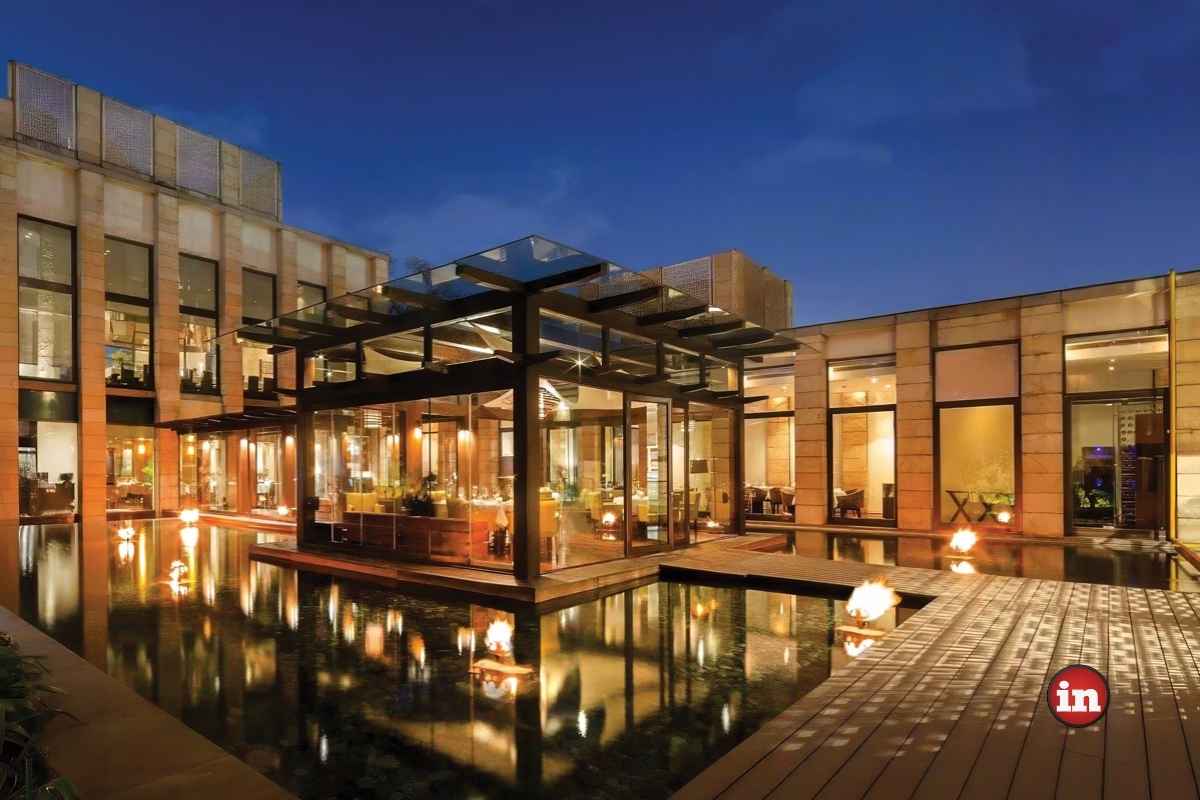
India’s finest chefs are no longer choosing between tradition and modernity. They are dabbling in both, and in doing so, creating a cuisine that belongs to the world.
If you have been visiting the wave of new age Indian restaurants, at some point you will doubtlessly have been caught starting at a plateful of food and not being sure what to make of it or call it.
You dive in, perhaps timidly. It is Indian, unmistakably so. The spice vocabulary, the layering of flavour, the fundamental relationship between ingredient and technique, all of it roots the dish in a tradition that is thousands of years deep. And yet it is also utterly of the world and of the moment. Global in its ambition, precise in its execution, and strangely, powerfully, new.
This is what the best of Indian dining looks like in 2026. And it is happening at a scale and with a confidence that would have been difficult to imagine even a decade ago.
The hyper-local revolution
For years, upscale Indian restaurants leaned heavily on global flavours or familiar North Indian classics. The geography of prestige in Indian dining was narrow: Mughlai, Punjabi, a curated selection of coastal dishes. The extraordinary diversity of regional Indian cuisine, be it Chettinad pepper, Northeastern smoked meats, Kodava-style game, Mangalorean seafood, the savoury traditions of Telangana, or more, was largely invisible on fine dining menus.
That has changed, decisively. According to the Godrej Food Trends Report 2025, close to three-quarters of industry experts now expect a surge in immersive, multi-course Indian tasting menus, with India’s foodservice market touching $77.5 billion in 2024. Chefs across the country are turning inward, according to Restaurant India, exploring the depth of Indian regional cuisines and bringing hyper-local flavours into refined, modern formats.
Chef Suresh DC’s Tuya in Hyderabad is one of the most eloquent expressions of this movement. His tagline, “The South Retold,” is a curatorial manifesto and not mere marketing conceit. A Telangana savoury Sarvapindi — rice flour, chana dal, peanuts, sesame — arrives as a crisp tart topped with avocado and spring onions. It is hyperlocal and global simultaneously, and the tension between the two is the point.
Going behind the Masque
Mumbai’s Masque has become the standard-bearer for what contemporary Indian fine dining can aspire to be. Consistently ranked among Asia’s best, it operates on a philosophy of radical hyper-seasonality and hyper-locality: every menu is built around what is growing, foraged, or caught at a specific moment, in a specific place. The philosophy is global; it owes much to the new Nordic movement and the farm-to-table traditions of California, but the ingredients and the cultural references are uncompromisingly Indian.
In New Delhi, Indian Accent continues to define the high watermark of contemporary Indian cooking, even after Chef Manish Mehrotra’s exit. The menu has never been content with pastiche, and does not deconstruct Indian dishes for the sake of novelty. Instead, it finds the points of genuine convergence between Indian flavour traditions and global technique, and builds from there.
And in Mumbai’s Bandra, Papa’s offers India’s most coveted 12-seat chef’s counter experience, helmed by Chef Hussain Shahzad. It offers perhaps the most intimate expression of this philosophy. A 13-course tasting menu that pays tribute to Shahzad’s creativity and the legacy of the late Floyd Cardoz. Dishes like Wild Rabbit Shawarma and Lamb Wellington sit on the menu as natural expressions of a sensibility that treats Indian cooking as a living tradition that is not bound by the weight of history, but instead elevated by it, as it embraces the world.
The story on the plate
What unites the best of India’s new dining culture is a commitment to storytelling that goes beyond technique. “We are entering an era of honest, often theatrical, soul-stirring storytelling,” Chef Milan Gupta told Restaurant India. “Guests don’t just want to be fed. They want to be moved.” The fire is brought to the table. The cook explains the ingredient’s provenance, its cultural history, its relationship to a specific community or landscape. The meal becomes a conversation between the kitchen and the guest, between tradition and the present moment.
This is also, increasingly, what international diners are seeking. The era of the restaurant as a stage for European classical technique has given way to one in which authenticity (genuine, documented, culturally grounded authenticity) is the most prized quality. India’s kitchens, with their extraordinary diversity of tradition and ingredient, are better positioned to deliver that authenticity than almost anywhere else on earth.
The world is finally ready to eat at India’s table. And India, for the first time, is setting it with full confidence in itself.