


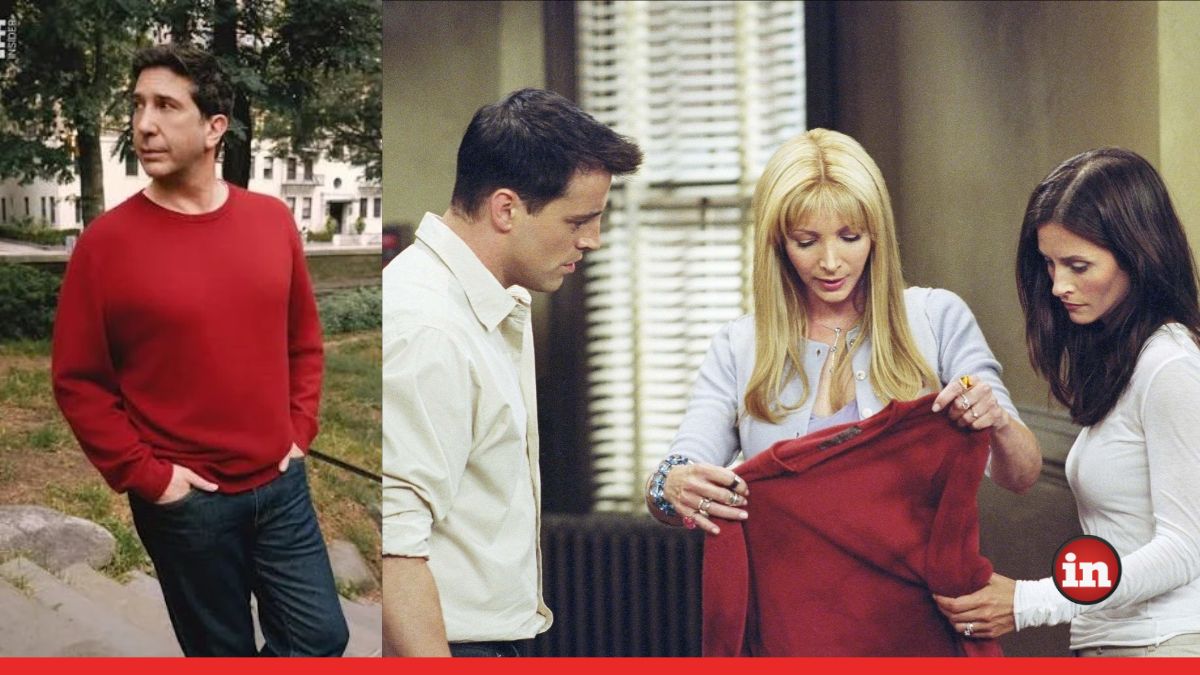
Nearly 25 years after one of Friends’ most memorable plot twists, David Schwimmer is revisiting the iconic red sweater in a new campaign for fashion retailer Quince, blending pop-culture nostalgia with holiday marketing.
Some advertising ideas don’t need an elaborate introduction. All they need is a familiar face, a memorable moment and a little nostalgia. Quince appears to have found the perfect combination with its latest holiday campaign, featuring David Schwimmer revisiting one of the most recognisable wardrobe moments from the television sitcom Friends.
Titled ‘The Red Sweater’, the 60-second campaign brings back memories of the show’s eighth-season episode, ‘The One with the Red Sweater’, which originally aired in October 2001. The storyline saw Ross Geller, played by Schwimmer, unintentionally reveal that he was the father of Rachel Green’s baby after recognising a red sweater left at her apartment.
More than two decades later, the actor finds himself chasing a red sweater once again, although the circumstances have changed considerably.
A Familiar Sweater Gets a New Advertising Story
Created for US-based fashion retailer Quince, the campaign turns the original television storyline on its head.
Instead of being identified through the sweater, Schwimmer is now on a mission to find one. As he moves through New York City, he encounters several people wearing Quince’s signature cashmere sweater. The unexpected twist? Almost everyone seems to own one, including a dog.
The humorous narrative draws on viewers’ familiarity with Ross and the original Friends storyline, giving the advertisement an emotional connection that goes beyond a conventional celebrity endorsement.
Schwimmer was also closely involved in the campaign’s development, contributing to the creative process from the script stage through the final edit.
Quince Introduces a New Cashmere Collection
The campaign also serves as the launchpad for Quince’s limited-edition ‘Coulis Red’ colourway across selected 100% Mongolian cashmere styles.
The collection features new red iterations of the retailer’s cashmere offerings, including men’s and women’s crewneck sweaters.
The campaign debuted on November 9, 2026, across YouTube and Instagram, with shorter versions and additional promotional content planned across digital and social media platforms.
Running across the United States, Canada and the United Kingdom, the activation represents an important step in Quince’s brand marketing strategy, combining celebrity association, digital storytelling and a seasonal product launch.
The Growing Power of Pop-Culture Nostalgia in Advertising
Quince’s campaign reflects a broader advertising trend: bringing back familiar entertainment properties and characters to create an immediate connection with audiences.
Nostalgia offers brands an opportunity to tap into shared cultural memories while making their products relevant to a new generation of consumers.
This approach has featured in several high-profile campaigns. Dunkin’s 2026 Super Bowl advertising, for instance, brought together familiar faces from popular 1990s sitcoms, including Friends. Similarly, Stella Artois previously revisited iconic characters from Sex and the City and The Big Lebowski, while Esurance featured Bryan Cranston reprising his Breaking Bad character.
What makes such campaigns effective is their ability to combine entertainment with brand messaging. Rather than relying entirely on product features or promotional claims, they use storytelling to create familiarity, engagement and shareability.
When Nostalgia Becomes a Marketing Advantage
With ‘The Red Sweater’, Quince demonstrates how a well-known entertainment reference can be reimagined into a contemporary brand story.
By bringing David Schwimmer back to a moment that Friends audiences instantly recognise, the retailer gives its holiday campaign a distinctive creative identity while introducing its latest cashmere collection.
The campaign also highlights an important lesson for marketers: sometimes, the strongest creative idea isn’t about inventing something entirely new. It is about finding a fresh way to make an existing cultural memory relevant again.