


While Western leaders scramble to adapt to a fractured world, one country has been running this play for seventy years
Words by Andrew Bustamante
The rules changed. Most leaders haven’t noticed yet.
For thirty years, the global economy ran on a single premise: open borders, shared supply chains, and mutual economic dependence would make the world more stable. Experts called it globalization. Politicians sold it as progress. Corporations built entire business models on its permanence.
It worked. Until it didn’t.
Today, trade blocs are hardening. Supply chains are reshoring. Strategic alliances are fracturing along lines that look less like free trade and more like Cold War geometry. The IMF reports trade policy uncertainty at its highest level in decades. Cross-border investment between geopolitical rivals has dropped more than 20% since 2017. Entire industries are being reclaimed as national security assets. Semiconductors. Pharmaceuticals. Rare earth minerals.
Western leaders are calling this disruption.
CIA officers call it Tuesday.
Operators have never lived in a globalized world. The intelligence environment has always been fragmented, competitive, and governed by parallel loyalties. There is no rules-based order in a forward deployment. There is only what your assets tell you, what your adversaries want you to believe, and what your mission actually requires.
The global economy is catching up to conditions intelligence professionals have operated in for decades.
India got there first.
While Western strategists are only now building redundant supply chains and managing relationships with competing powers, India has been running this playbook since 1947. The Non-Aligned Movement was not a diplomatic abstraction. It was strategic architecture. Nehru understood that a fragmented world required parallel access, managed loyalties, and strategic patience. He built India’s foreign policy around it.
The rest of the world is now paying tuition to learn what India already knows.
Here is what CIA training teaches about operating in fragmented environments. And why India’s example is the proof of concept every global leader needs to study.
Parallel Access replaces Single Dependency
The cardinal sin in intelligence operations is single-source dependency. One asset. One channel. One country.
When that source is compromised, your mission ends.
Global supply chains were built on single-source dependency at industrial scale. One semiconductor corridor. One rare earth processor. One logistics network optimized for peacetime. The fragility was always there. It just had not been tested yet.
Elite operators build parallel access. Multiple assets, multiple channels, multiple routes to the same objective. The redundancy looks expensive until the primary channel fails. Then it looks like survival.
India has practiced this instinctively. The China+1 manufacturing shift currently reshaping global industry is not a new idea to Indian policymakers. It is validation. India spent years building the infrastructure, the PLI schemes, and the diplomatic relationships to absorb exactly this kind of redirect. When global companies needed an alternative, India had already prepared the ground.
That is not luck. That is parallel access, built deliberately over decades.
Competing loyalties are a feature, not a problem
Conventional business thinking wants partners who are fully aligned. Same values, same incentives, same direction.
That partner does not exist in a fractured world.
India’s strategic position is the most instructive example on the board right now. India purchases Russian defense systems while deepening its Quad partnership with the United States. It buys discounted Russian oil while signing semiconductor agreements with American firms. It maintains its own strategic calculus while every major power courts its alignment.
Western analysts have spent years calling this ambiguous.
It is not ambiguous. It is leverage.
Nations and companies that operate effectively across competing loyalties are not compromised. They are powerful. The skill is not finding pure allies. The skill is knowing exactly what each partner will and will not do and engineering your position around that reality.
India has not stumbled into this position. It has built it, defended it, and refined it through seven decades of deliberate statecraft. That is the model. Not a problem to be solved. A capability to be studied.
Strategic patience is the dominant competitive advantage
In field operations, the most dangerous moment is when the situation is unclear and the pressure to act is highest.
That is exactly where global markets are today.
The instinct is to make a definitive call. Reshore everything. Pick a bloc. Commit and execute.
Operators learn to resist that instinct.
When the environment is fragmenting, the highest-value move is optionality. Preserve your access. Maintain relationships across competing factions. Avoid commitments that foreclose future maneuver. The leaders who emerge strongest from this period will not be the ones who called it correctly in 2025. They will be the ones who stayed in the game long enough to call it correctly in 2028.
Viksit Bharat 2047 is a twenty-year strategic vision. Not a quarterly earnings target. Not a five-year plan. Twenty years. That is the timeline of a nation that understands strategic patience as a competitive weapon.
The West has not learned this yet.
Fragmentation is not a crisis to manage and resolve. It is the new operating environment. The question is not when globalization returns. The question is whether your organization was built for a world where it does not.
India was built for that world.
The rest of us are catching up.
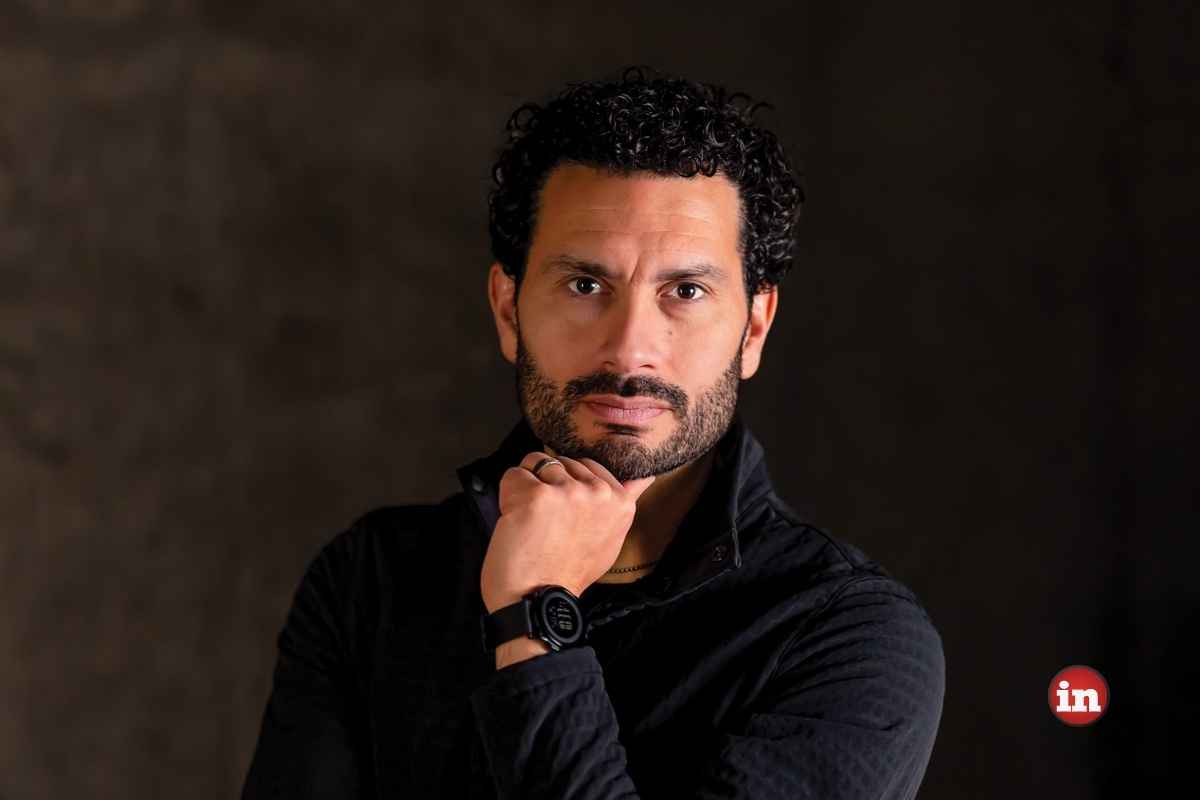
Andrew is a former covert CIA Intelligence officer, decorated US Air Force Combat Veteran, and respected Fortune 500 senior advisor. Learn more by visiting everydayspy.com and by following @EverydaySpy on your favorite social media platform.