


A seasoned industry veteran reflects on the larger opportunity India now has on the global stage
Andre Eckholt arrived in India to build Hettich’s first greenfield manufacturing facility, and somewhere along the way, India built something in him too. Now Managing Director for India, SAARC, the Middle East, and Africa, he oversees one of the most ambitious bets any European manufacturer has placed on this country. This is a conversation about long-term thinking, the power of trust, and why the next chapter of Indian manufacturing is only just beginning.
Hettich is 138 years old, family-owned, and now in its fourth generation, yet it continues to move and invest with the urgency of a company still proving itself. What is it about that family-owned DNA that enables long-term thinking in an era where most businesses are chasing the next quarter?
Hettich has always believed that sustainability in business is not about the next quarter, but about the next generation. Being a 138-year-old family-owned company gives us the freedom to think in decades, not reporting cycles. That changes the quality of decisions you make.
When ownership and responsibility stay closely connected, there is naturally a stronger commitment to people, partnerships, and reputation. We are not building for short-term valuation; we are building for continuity. That allows us to invest patiently in innovation, manufacturing, skill development, and markets like India long before they fully mature.
At the same time, family ownership does not mean being conservative or slow. In fact, it creates accountability. Every generation inherits not just a business, but a responsibility to leave it stronger than they received it. That is why even today Hettich operates with the energy and ambition of a company still hungry to grow and prove itself.
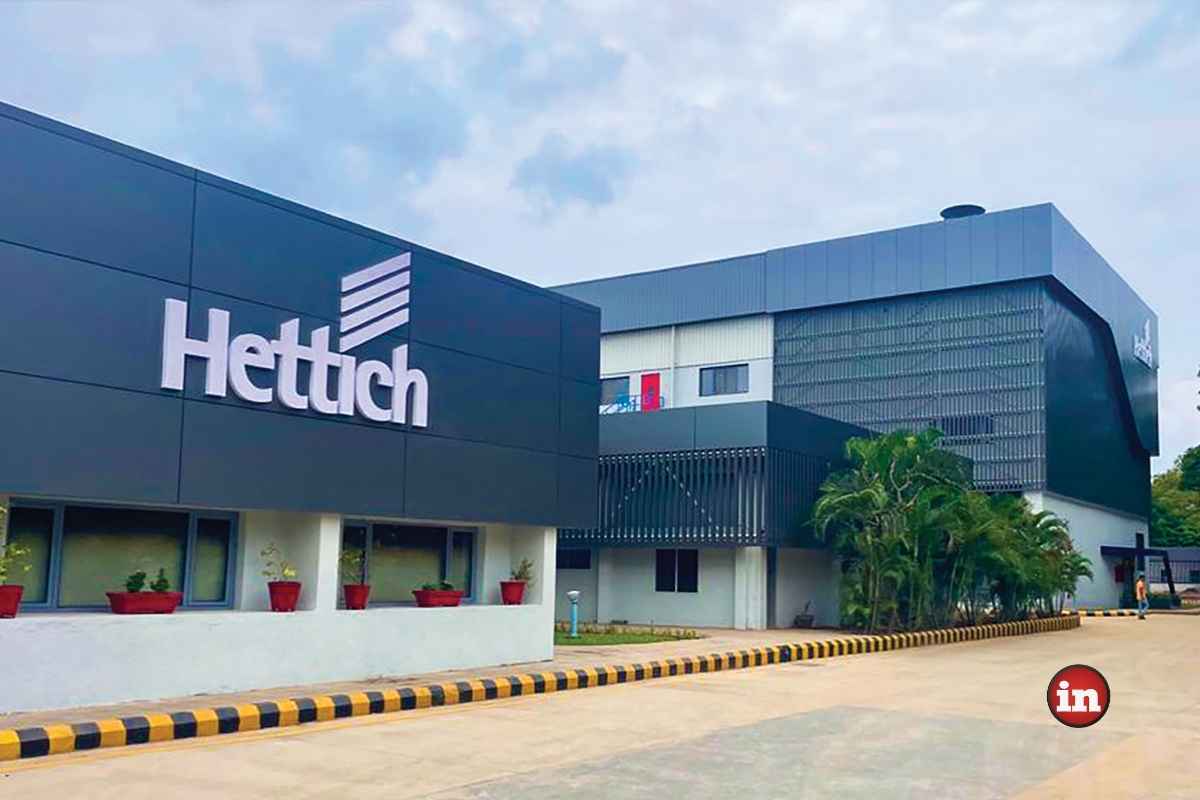
India has become Hettich’s second-largest manufacturing hub globally, and you’ve just inaugurated a new manufacturing facility in Indore as part of an overall investment of over Rs 2,000 crore. What does that level of commitment say about how Hettich reads India’s trajectory, and what do you need the ecosystem around you to deliver for that bet to fully pay off?
India becoming Hettich’s second-largest manufacturing hub globally reflects the enormous structural transformation taking place in the country, namely rising aspirations, rapid urbanisation, organised housing growth, and a clear shift toward better-designed living spaces.
Our investment of over Rs 2,000 crore, including the new manufacturing facility in Indore, is a strong statement of confidence in India’s long-term trajectory. We do not see India merely as a consumption market; we see it as a strategic manufacturing and innovation hub for the future. In fact, we have been manufacturing in India for the last 10+ years, and with every phase of investment, India has rewarded us positively. That gives us tremendous confidence. As we continue to expand our manufacturing footprint here, we already have a clear long-term roadmap for the future and are excited about the opportunities ahead.
For this potential to fully materialise, the ecosystem must continue evolving in three important areas: infrastructure, skilled talent, and manufacturing competitiveness. Robust supply chains, policy stability, faster industrial approvals, and stronger vocational skilling are all critical.
Equally important is the development of a globally competitive supplier ecosystem. India has the talent and entrepreneurial capability to become a world-class manufacturing base, but scale and quality consistency must improve across the value chain. When industry and policy move together with long-term intent, India can become one of the most important manufacturing destinations globally.
You oversee not just India but also SAARC, the Middle East, and Africa from here. That is a remarkable geographic mandate to run out of one country. How has operating across such diverse markets sharpened your understanding of what Indian manufacturing can and must become on the world stage?
Managing India, SAARC, the Middle East, and Africa from India has been a fascinating learning experience because these markets are incredibly diverse in culture, economics, infrastructure maturity, and customer expectations. In many ways, though, working across diverse geographies has always been part of my professional journey. Experiencing new cultures, adapting to different business environments, and learning from unexpected situations has become second nature to me.
When I first came to India to set up Hettich’s first greenfield manufacturing facility, I saw firsthand both the scale of the opportunity and the complexity of building operations in such a dynamic environment. That experience gave me a very deep appreciation of India’s manufacturing potential, and the resilience required to succeed here.
What becomes very clear across all these regions is that the future belongs to agile manufacturing ecosystems that can combine quality, speed, innovation, and localisation. Operating across these markets has reinforced my belief that Indian manufacturing has tremendous, untapped potential. India has scale, engineering capability, entrepreneurial energy, and increasingly strong domestic demand. What it now needs is greater consistency in execution and a stronger global manufacturing mindset.
The world today is looking for resilient supply chains and trusted manufacturing partners. India is uniquely positioned to play that role. But to compete globally, manufacturing in India must move beyond cost competitiveness alone. It must stand for reliability, process excellence, sustainability, and long-term trust.
At Hettich, we are already seeing India evolve from being a market we serve to becoming a market from which we serve the world. That shift is extremely significant and, in many ways, reflects the larger opportunity India now has on the global stage.
As Co-Chair of the FICCI Furniture Committee, you’ve spoken about India’s potential to become one of the top three global players in furniture manufacturing. What is the single most important thing that still needs to happen for that ambition to become a reality, and who needs to make it happen?
If I had to identify one single factor, it would be the creation of a deeply integrated manufacturing ecosystem. No country becomes a global furniture powerhouse through isolated success stories. It requires strong coordination across raw materials, components, machinery, design, logistics, skilling, and exports.
India has all the ingredients i.e. talent, domestic demand, entrepreneurial drive, and manufacturing ambition. What we now need is scale with standardisation. The sector must become more organised, technology-driven, and globally benchmarked. Hettich’s own journey in India reflects this. Building strong manufacturing capabilities and trusted quality standards takes time and long-term commitment. However, the growth momentum today is being significantly accelerated by the Government of India’s ‘Make in India’ push and the implementation of BIS regulations, because manufacturing and quality must go hand in hand.
This responsibility cannot sit with one stakeholder alone. Industry, government, academia, and skilling institutions must work together. Policy support is important, but industry must also invest more aggressively in automation, design capability, sustainability, and workforce development.
I genuinely believe India can become one of the top three global furniture manufacturing hubs. The opportunity is real. With the right long-term vision, execution, and ecosystem collaboration, India has the potential to multiply its growth many times over and emerge as a true global leader in the years ahead.
You came to India as an outsider, fell in love with it, and have now spent years building a business here. What has India taught you about leadership, relationships, and the way business actually gets done, that you could not have learned anywhere else?
India has taught me that business is ultimately built on trust and relationships far more deeply than spreadsheets or presentations can capture. There is a strong emotional dimension to business here. People want to know who you are, what you stand for, and whether you are committed for the long term.
This resonates deeply with Hettich because we ourselves are a family-owned company. Many of our customers in India are also family-run businesses, where one generation started working with us 25 years ago when we stepped foot into India at the beginning of the new millennium, and today the next generation has taken over those relationships and made them even stronger. Our mindset towards long-term value creation is very aligned, and that has helped us build partnerships that truly withstand the test of time.
That same philosophy has also shaped the way we have built the Hettich brand in India. We did not come here with a short-term market approach; we invested in building trust, staying close to customers, strengthening local manufacturing, developing skills through initiatives like Hettich Poddar WoodWorking Institute (HPWWI), and creating a strong on-ground presence across the country. Over the years, Hettich has become a trusted and aspirational brand not just because of our products, but because people know we are deeply committed to India’s growth story for the long term.
As an outsider who came to India years ago, I initially thought I would primarily bring global experience into the market. But over time, I realised India was teaching me equally important lessons in adaptability, resilience, and human connection.
Personally, India has changed my understanding of leadership. Leadership here is not just about strategy and execution; it is also about empathy, relationships, and staying connected to people at every level. That is something profoundly valuable, and something I carry with me every day.