


The world’s first cyborg weighs in on perception, identity, and existence
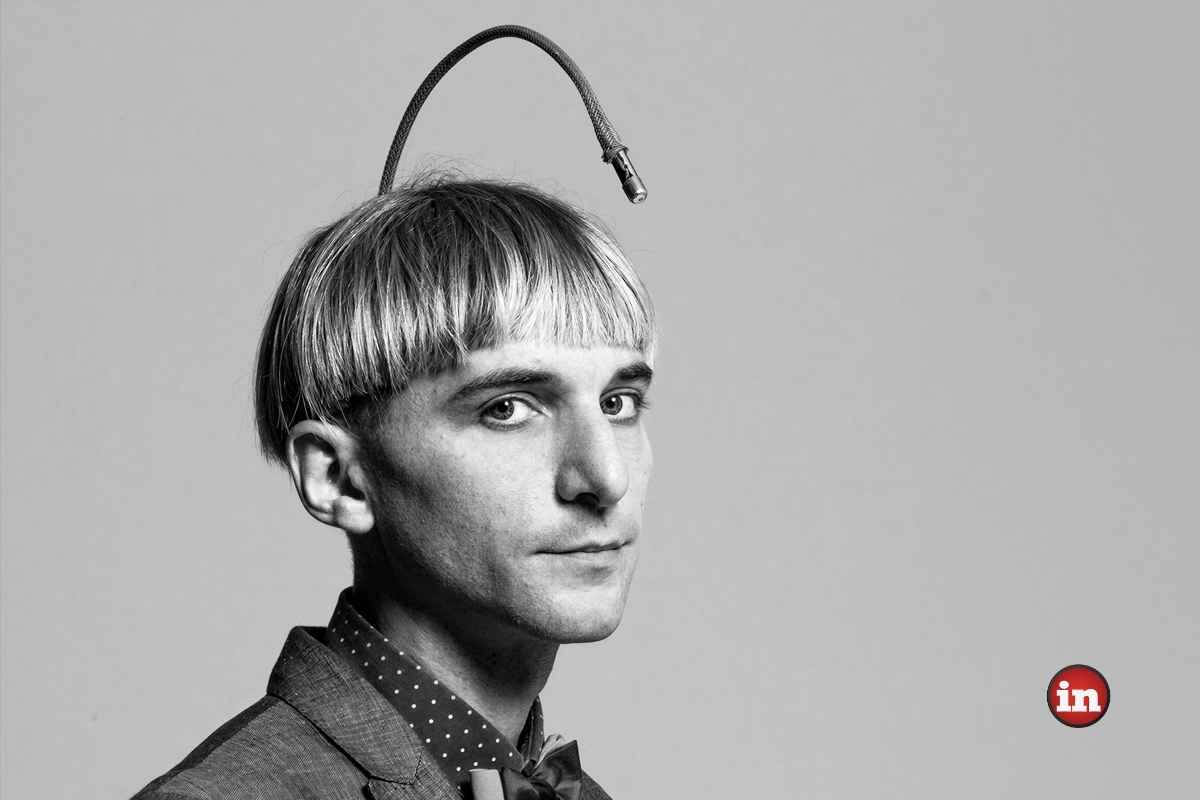
Neil Harbisson was born without the ability to see colour. Today, an antenna implanted in his skull allows him to perceive not just the visible spectrum, but infrared and ultraviolet light, as sound transmitted through bone.
Legally recognised as the world’s first cyborg, he has spent two decades living at the boundary between human and machine, and thinking deeply about what that delineation means. What he has to say challenges almost everything we assume about technology, identity, and the future of human experience.
human-machine collaboration is not a partnership. It is not two entities working together.
Most people think of technology as something they use. You think of it as something you are. That distinction is most fascinating. When did that shift happen for you, and what did it change about the way you see the world?
The shift did not happen as a decision, it happened the moment the antenna stopped feeling like a device and started feeling like a sense.
In the beginning, I was interpreting data, I was translating color into sound consciously. After some time, the interpretation disappeared. Red was no longer a frequency I had to decode; it became an immediate perception. That is when technology stopped being something I used and became something I was. It changed my relationship with reality because it expanded it. The world was no longer limited to what my biological senses could access. It became a continuous flow of additional layers: infrared, ultraviolet, even colors from places I was not physically in.
You’ve spoken about giving humans new senses rather than just new tools. In a world obsessed with AI and external intelligence, why do you think we’ve been so slow to turn that attention inward, towards expanding the boundaries of human perception itself?
We have been slow to expand perception because tools are easier to commercialize than senses. A tool remains external; it does not challenge identity. A new sense does. It forces you to redefine what it means to be human.
AI is attractive because it extends capability without altering the body. But perception is more fundamental than intelligence. Intelligence processes reality; perception defines what reality is. If you expand perception, you are not just improving humans; you are creating new ways of existing. That is a more radical step, and society tends to delay radical steps.
Business leaders today talk endlessly about human-machine collaboration. But you’ve actually lived it, literally, for decades now. What do they get wrong about what that relationship really feels like from the inside out?
What many business leaders misunderstand is that human-machine collaboration is not a partnership. It is not two entities working together. When integration is deep, there is no negotiation between human and machine. There is no “interface” moment. It becomes a single system. The question is not how to collaborate, but how to merge. And merging removes distance. It removes the feeling that the machine is helping you. Instead, it feels like your own perception, your own intuition. That is a very different experience from using software or even wearing devices.
Your antenna connects you to the internet, meaning you can receive data and signals from external sources directly into your perception. We must ask; how does that shape the sense of where you end and the world begins?
Connecting to the internet through the antenna does not feel like accessing information. It feels like receiving stimuli.
If I receive a color from a satellite or from a person in another city, it is not experienced as “data from outside.” It is experienced as a perception, just like hearing a sound around me. This blurs the boundary between where I end and where the world begins. The body is no longer defined by skin. It becomes defined by perception. Wherever your senses can reach, that is where you are.
You co-founded the Cyborg Foundation to defend the rights of people with technologically extended bodies. As augmentation becomes more mainstream, what is the one conversation society needs to have urgently that it is currently avoiding for whatever reason?
The conversation society is avoiding is not about safety or regulation. It is about identity and rights. If we accept that senses can be designed and added, then we must also accept that humans are no longer fixed.
This raises uncomfortable questions: Who has the right to modify perception? Can a government restrict a sense? Can a company own part of your perception if it is connected to their infrastructure? These are not future questions, they are present ones. The urgency is not technological. It is philosophical and legal. Society is still treating augmentation as an accessory, when in reality it is becoming part of the body. That requires a complete redefinition of human rights.