



Major General Rajiv Narayanan’s breadth of knowledge is one that reveals fascinating insights into defense policy, geopolitics, and India’s global partnerships
The world is going through singularly unique times, fracturing as it were into multiple world orders. And as someone who has spent the best part of four decades on its frontlines, Major General Rajiv Narayanan (recipient of the AVSM, VSM) is uniquely poised to delve into military strategy and the geopolitics of it all.
As a Visiting Fellow at Centre for Land Warfare Studies (CLAWS), New Delhi and Member of the Chennai Centre for China Studies, he brings both institutional depth and intellectual independence to some of the most consequential questions facing India today: the shifting world order, the China challenge, and what strategic autonomy truly demands of a rising power. What follows are excerpts from our conversation with him.
China remains India’s most complex and consequential strategic challenge. As a Member of the Chennai Centre for China Studies, how do you read Beijing’s posture toward India right now, and what should Indian business and policymakers understand about China that the mainstream conversation tends to get wrong?
To understand the mindset of the Chinese, we need to grasp their history and culture, plus their geography, which dictates their behaviour pattern. China has a very distinct view of the World, very clearly enunciated and taught to their children since school days – five concentric geographic zones consisting of the Royal Domains, Princely Domains, Pacification Zone, Allied Barbarians, and Zone of savagery.
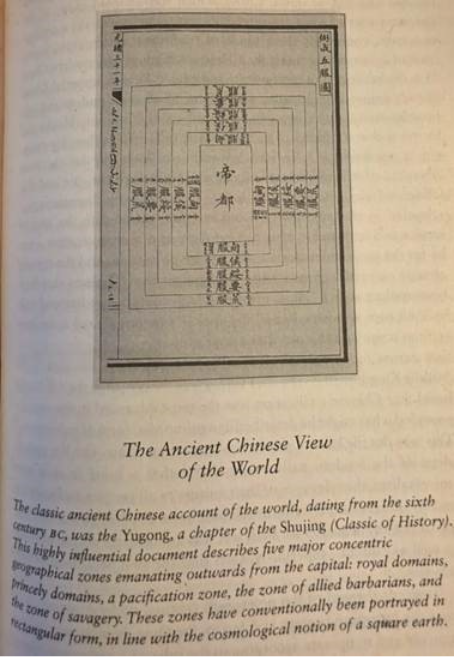
(Pg 305, When China Rules the World, Martim Jacques, Penguin, 2009)
So, it looks down upon all outside their Princely domains, as regions to be dominated, both geo-politically and geo-economically.
Chiang Kiashek had also made a mention that there cannot be two suns in the Universe, which is followed by the Communist Party. It looks upon India as its main challenger in Asia.
Till they can dominate, they utilise deception in a big way. The 36 Stratagems used in politics, war, and civil interaction for deception gives a fair idea of what to accept from the Chinese.
India has consistently pursued strategic autonomy, maintaining relationships with Russia, the US, and the Global South simultaneously. In an increasingly polarised world, how sustainable is that position, and what are the real costs and benefits of staying non-aligned?
The essential difference between Strategic Autonomy and Non- Alignment needs to be understood. Non-Alignment was a grouping to enable the countries of Global South to avoid being forced into either block during the Cold War era. Most never had the range, scope, depth and economic heft to individually withstand the pressure to take sides.
Strategic Autonomy, on the other hand implies multi-lateralism, wherein because India has the range, scope, depth and economic heft with a large market, it can avoid taking sides and have relations based on national interests. It is this that provides India with the geo-economic and geopolitical heft. Thus, despite conflicts in Europe and West Asia, India still maintains mature and cordial relations with both sides of these divides.
It is because the range, scope and depth that India provides in manufacturing and its market that both sides desire to maintain good relations with India and are generally comfortable with India’s strategic autonomy.
The India-Pakistan dynamic has taken on new dimensions recently, with conflict, trade suspension, and regional instability all in play. How does that volatility affect India’s broader ambitions as a rising power, particularly its economic and diplomatic credibility on the global stage?
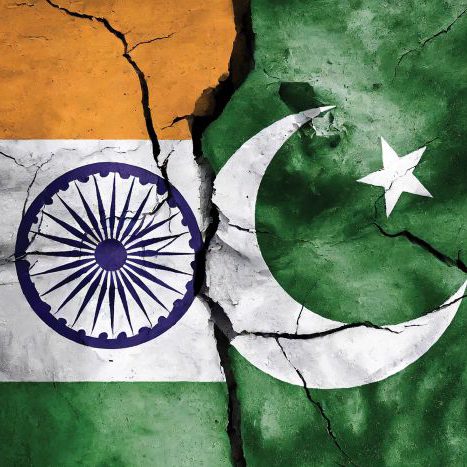
It is time that we do not look on Pakistan as any challenge to India, except as a disruptor. Today Pakistan is desperately attempting at every level to equate itself with India, which is farcical.
The trade suspension does not impact India’s economy as Pakistan’s market amounts next to nothing. Their attempts at regional instability is not working, even as it faces very deep entropical challenges.
Pakistan desperate attempts have had virtually no impact on India’s rise, even as the evolving global order has India as the base/foundation/fulcrum.
Economically, the world is looking towards India, the fastest growing economy. The IMF Managing Director Kristalina Georgieva, who spoke ahead of the 2025 IMF-World Bank Annual Meetings in October 2025, and even in April 2026, stated unequivocally that India is turning into a key engine of world growth.
So let us celebrate it, strive to maintain it, stop equating ourselves with Pakistan, and deal with it as we would a pimple.
You’ve been closely involved with future strategy and force modernisation during your service career. As warfare becomes more technological, and as AI, cyber, and space become the new theatres of conflict, what does India need to do urgently to stay strategically relevant in the decades ahead?
We have some of the best minds leading our Armed Forces. Just look at how we shocked and surprised the world with how our Armed Forces utilised all the above so effectively in Op Sindoor in May last year. Within 4 days, Pakistan was brought to its knees, and the damage inflicted on them is yet to be repaired/made useable.
There is a major push that is visible wherein there is a very close cooperation emerging between the military – DRDO – Academia – Public & Private Defence Industry.
The military is also closely watching the conflicts around and drawing the lessons for the future battlefield.
There is, however, an urgent need to speed up the Capital Acquisition. The DPP needs to evolve from being procedure centric to procurement centric.
That said, there will obviously be slippages in financial years. Rather that subsuming the unconsumed Capital Expenditure back to the Consolidated Fund of India, the Government and RBI could consider a Defence Capital Roll over Account, where the unspent capital is held by RBI. Overtime, it would be able to cover a sizeable chunk of committed liability (expenditure incurred in subsequent years, till the contract is completed).