



The silent shift towards protecting information throughout its lifecycle is one organisations must make if risks are to be mitigated and managed in a hybrid and distributed work environment. We catch up with a senior Konica Minolta representative to understand the underpinnings of this philosophy
Everyone knows Konica Minolta for hardware. But today, you are pitching yourself as a ‘Digital Workplace Partner.’ Is your biggest challenge actually the technology, or is it simply convincing an Indian CIO to stop seeing you as just ‘the copier company.
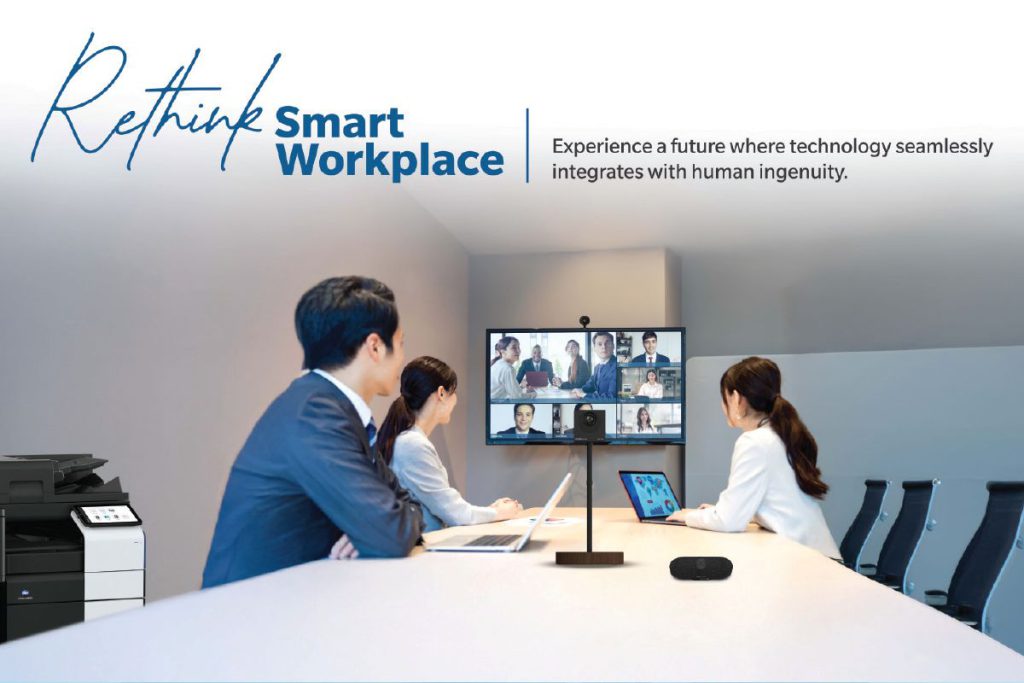
The technology today is used as an enabler to improve the systems & process to bring more efficiency. Konica Minolta has been investing globally for years in areas such as intelligent document management, workflow automation, security, and data-led services. The larger shift is in perception. Indian CIOs are increasingly outcome driven. When conversations move from devices to productivity, efficiency, security, compliance, and information flow, the discussion naturally expands beyond hardware. Our role today is to demonstrate how printing is only one touchpoint in a much larger digital workplace ecosystem. Once CIOs see how our workflow solutions integrate into their IT landscape and solve real operational challenges, the perception shift happens organically from a hardware company to a solution provider.
We spend millions securing our servers and laptops, but we often ignore the printer in the hallway. In 2026, is the office printer actually the most dangerous open door in a company’s cybersecurity wall?
Printers are no longer standalone devices. They are intelligent, network-connected endpoints that handle sensitive business information. When unsecured, they can become a silent vulnerability.
In 2026, cybersecurity must be holistic. Konica Minolta approaches print security as part of the overall IT and information security framework, covering device access control, data encryption, user authentication, secure document release, and audit trails. The goal is not just to secure the printer, but to protect information throughout its lifecycle. Organisations that recognise this shift are far better positioned to manage risk in a hybrid and distributed work environment.
With the explosion of quick-commerce and D2C brands in India, the package has become the new storefront. How is digital printing allowing small startups to compete with big FMCG giants on shelf appeal, without needing massive budgets?
Digital printing is fundamentally changing the economics of packaging and branding. For startups and D2C brands, it removes the need for large minimum order quantities and expensive tooling. With digital production presses and embellishment technologies, brands can experiment with designs, personalise packaging, launch limited editions, and respond quickly to market trends. Konica Minolta’s digital print solutions enable high-quality output, shorter runs, and faster turnaround times. This allows startup brands to create strong shelf impact and brand recall without the capital intensity traditionally associated with packaging.
The ‘Paperless Office’ has been predicted for decades, yet paper survives. As hybrid work becomes the norm, does the role of the office printer shrink, or does it evolve into a ‘smart hub’ that digitizes workflows instead of just printing them?
The idea of a completely paperless office has evolved into a more practical reality, one where physical and digital workflows coexist. While digital transformation continues to accelerate, paper remains embedded in everyday business processes. The role of the office printer is evolving, not disappearing.
In hybrid work environments, organisations still rely on documents for compliance, collaboration, and decision-making. What has changed is how those documents move through the organisation. Today, the printer functions as a smart hub that connects physical and digital workflows. With integrated scanning, intelligent document management, automation, and secure access, it becomes a gateway for digitising information and streamlining processes. Konica Minolta’s vision of the digital workplace is built around enabling this seamless flow of information, wherever employees are working from.