


Beyond sustainability, green manufacturing offers near-unassailable advantages for practitioners
Words by Navin Mittal
India’s manufacturing sector stands at a defining crossroads: As the world’s fastest-growing major economy accelerates its journey toward becoming a global manufacturing powerhouse, the sector faces a challenge unlike any it has encountered before: how to sustain rapid industrial growth while preserving resources, reducing emissions, and creating long-term value for future generations.
For decades, manufacturing success was measured by production volumes, operational efficiency, and profitability. Today, a new metric has emerged sustainability.
Customers are demanding greener products. Investors are prioritizing ESG performance. Governments are tightening environmental regulations. Global supply chains increasingly favour sustainable suppliers. In this evolving landscape, sustainability is no longer a corporate responsibility initiative; it has become a strategic business imperative.
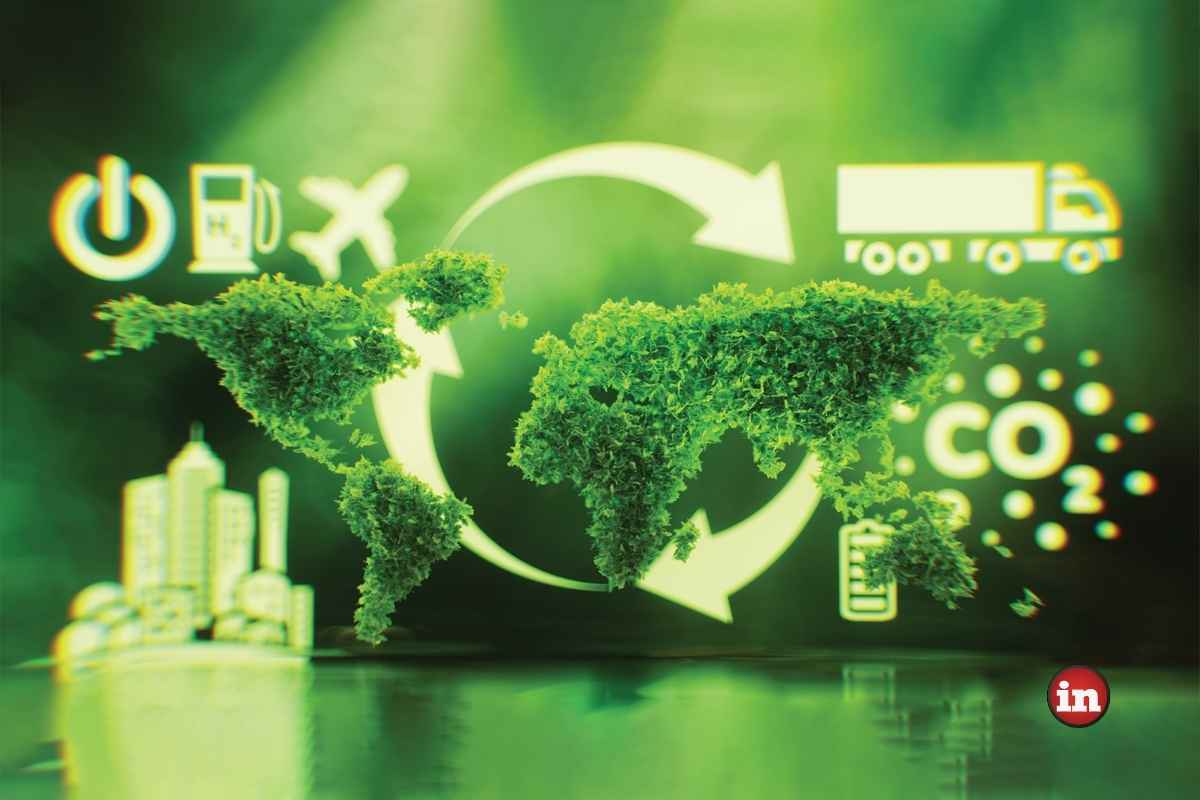
At the heart of this transformation lies the concept of the Circular Economy a framework that is rapidly reshaping the future of manufacturing across the globe.
Moving beyond the linear economy
Traditional manufacturing has largely operated on a linear model: Take, Make, Use, Dispose. Raw materials are extracted, transformed into products, consumed, and ultimately discarded as waste. While this model fueled industrial development for centuries, it has also resulted in unprecedented resource depletion, environmental degradation, and waste generation.
According to global estimates, humanity currently consumes natural resources at a rate faster than the planet can regenerate them. Rising energy costs, climate risks, supply chain disruptions, and resource scarcity are exposing the limitations of this linear approach.
The Circular Economy offers a fundamentally different model.
Rather than treating products and materials as disposable, circular systems are designed to keep resources in productive use for as long as possible through reuse, repair, remanufacturing, refurbishment, and recycling.
The objective is simple yet transformative: Design out waste. Keep materials in circulation. Regenerate natural systems.
For manufacturers, this means moving from a mindset of consumption to one of stewardship.
India’s manufacturing sector: A defining opportunity
India is uniquely positioned to lead the next wave of sustainable industrial growth.
Manufacturing contributes significantly to the nation’s GDP and employment generation. Government initiatives such as Make in India, Production Linked Incentive (PLI) schemes, National Infrastructure Pipeline projects, and industrial corridor developments are accelerating investment across sectors.
Recent manufacturing growth indicators continue to demonstrate robust expansion driven by domestic demand, infrastructure spending, and increasing industrial activity.
India has committed to achieving Net Zero emissions by 2070, making industrial decarbonization a national priority. The manufacturing sector will play a central role in determining whether these ambitions become reality, this is where circular economy principles become indispensable.
Several Indian manufacturers have already begun demonstrating how sustainability and profitability can coexist. Tata Steel has invested extensively in resource efficiency programs, waste utilization initiatives, and low-carbon production technologies. Mahindra Group too has put sustainability at the center of its corporate strategy through renewable energy adoption, water positivity programs, waste reduction initiatives, and carbon management efforts. And ITC has established one of India’s most comprehensive sustainability models. Through large-scale recycling initiatives, sustainable packaging solutions, and responsible sourcing programs, the company has built circular systems that generate environmental, social, and economic benefits simultaneously.
Industry 5.0: The next evolution of manufacturing
The emergence of Industry 5.0 marks a significant shift in manufacturing priorities.
While Industry 4.0 focused primarily on automation and productivity, Industry 5.0 emphasizes resilience, sustainability, and human-centric innovation.
Technologies driving circular manufacturing include AI, which enables manufacturers to optimize production planning, reduce defects, predict equipment failures, and minimize material wastage. Another advance is the Industrial Internet of Things (IIoT), which sees sonnected devices provide real-time visibility into energy consumption, emissions, equipment performance, and resource utilization. This, coupled with other innovations such as Digital Twins and Predictive Analytics, allow organizations to produce more value while consuming fewer resources.
The rise of regenerative manufacturing
The future of manufacturing extends beyond reducing environmental impact.
A growing number of global organizations are embracing regenerative manufacturing, an approach focused on restoring ecosystems, replenishing resources, and creating net-positive environmental outcomes.
Future factories may not simply consume less energy; they may generate renewable energy. They may not simply reduce water consumption; they may replenish local water resources. They may not simply lower emissions; they may actively remove carbon from the atmosphere. This represents the next frontier of industrial leadership.
The global manufacturing landscape is undergoing a profound transformation. The organizations that thrive in the coming decades will not necessarily be those that produce the most. They will be those that create the greatest value with the least environmental impact.
Circular economy principles provide a roadmap for achieving this balance.They enable manufacturers to decouple growth from resource consumption, strengthen resilience, reduce waste, lower emissions, and unlock new opportunities for innovation and profitability.
Clearly, the future of manufacturing is not merely digital or efficient; it is circular, sustainable, and regenerative.