


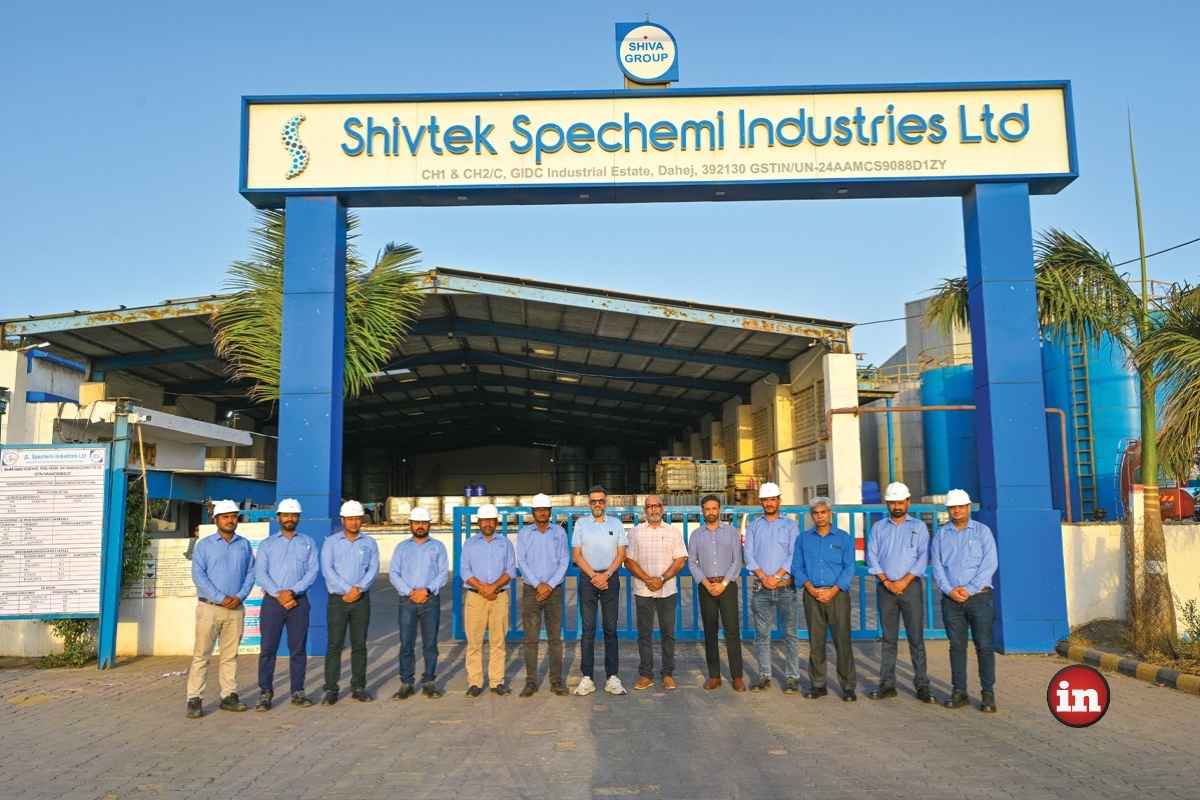
Meet the man quietly building one of India’s most resilient chemical companies
Dr. Amitt Nenwani did not set out to build a bigger business; he set out to build a better one. As Managing Director of Shivtek Spechemi Industries, he has spent two decades steering the company away from commodity volumes and toward something far more durable: differentiated, sustainable, and digitally enabled specialty chemicals. His is a story of deliberate transformation, one careful, consequential decision at a time.
Shivtek has been on a journey of transformation over the past two decades, from global expansion to green chemistry to digital manufacturing. Looking back, what was the single hardest shift to make, and what made it worth it?
The most challenging shift in Shivtek’s transformation journey was moving from a volume-driven commodity business to a value-driven specialty chemicals model. This transition required a fundamental change in mindset, from focusing on scale and output to prioritizing innovation, application development, and long-term value creation.
Specialty chemicals demand deeper R&D capabilities, longer development cycles, and a far more nuanced understanding of end-use industries. Building this required sustained investment in pilot plants, scientific talent, and process capabilities, all while continuing to scale the business globally. What made this shift difficult was that it had to be executed alongside expansion and without disrupting existing operations. However, it has been the most rewarding decision, as it enabled stronger margins, differentiated offerings, and deeper customer relationships. More importantly, it positioned Shivtek as a solutions-driven organization, capable of delivering high-performance and increasingly sustainable chemistries, rather than just supplying products.
Specialty chemicals is a sector that sits at the intersection of geopolitics, sustainability, and supply chain complexity. How has the global fragmentation of trade and raw material sourcing changed the way you think about building a resilient business?
Global fragmentation has fundamentally redefined resilience in the specialty chemicals sector. Earlier, supply chains were optimized primarily for efficiency and cost, but today the focus has shifted toward continuity, flexibility, and risk mitigation.
At Shivtek, this has translated into a more structured and proactive approach to supply chain design. We have diversified our sourcing strategies to reduce dependence on specific geographies, strengthened supplier relationships, and built inventory frameworks that allow us to absorb short-term disruptions.
Additionally, we have become far more agile in logistics planning, exploring alternative routes and partnerships to ensure uninterrupted deliveries. Experiences during recent geopolitical disruptions, particularly around shipping and freight volatility, reinforced the importance of preparedness and foresight. Despite external challenges, maintaining consistent production and honoring customer commitments has remained a priority. In this environment, resilience is no longer reactive. It is deliberately built into the system to ensure stability for customers even in uncertain global conditions.
You’ve led the transition to sustainable manufacturing at a time when green chemistry was not yet mainstream in India. What does responsible industrial leadership actually look like in practice, beyond the certifications?
Responsible industrial leadership extends far beyond certifications and compliance. It is reflected in how decisions are made across the organization on a daily basis. At Shivtek, this begins with embedding sustainability into product innovation itself. The development of biodegradable plasticizers and greener chemical alternatives demonstrates that performance and environmental responsibility can coexist without compromise.
Equally important is the way manufacturing systems are designed, with a focus on closed-loop processes, Zero Liquid Discharge systems, and efficient resource utilization to minimize environmental impact. Responsible leadership also involves taking a long-term view of industry and ecosystem health. This includes ensuring supply continuity for customers during challenging periods, maintaining fair and transparent pricing, and supporting the broader industry when needed. Ultimately, it is about aligning growth with accountability and ensuring that expansion, innovation, and sustainability progress together in a balanced and responsible manner.
Digital transformation in manufacturing is often talked about at a surface level. What does it genuinely mean on the shop floor at Shivtek, and what has surprised you most about the process?
At Shivtek, digital transformation is not limited to adopting new tools. It is about fundamentally enhancing how manufacturing systems operate. On the shop floor, this involves integrating AI-driven analytics, predictive maintenance, and advanced automation to improve process efficiency, product consistency, and operational safety. Real-time monitoring systems enable faster and more informed decision-making, while automation reduces variability and enhances scalability across operations.
Beyond manufacturing, digital initiatives are also transforming customer engagement through AI-powered platforms that improve responsiveness and transparency. What has been most surprising is the cultural shift that accompanies this transformation. The move toward data-driven decision-making has made the organization more agile, reduced dependency on manual processes, and improved overall responsiveness. In many ways, digital transformation has evolved from being a technological upgrade to becoming a core operating philosophy that drives efficiency, reliability, and long-term competitiveness.
For the next generation of leaders in the chemical industry, what is the one piece of advice you wish someone had given you early in your career?
One of the most important lessons for the next generation of leaders is to focus on building depth before chasing scale. The specialty chemicals industry is inherently complex and requires a strong understanding of science, applications, and customer needs. While growth and expansion are important, long-term success comes from differentiation and innovation rather than just capacity. Investing early in technical knowledge, R&D capabilities, and customer-centric thinking creates a strong foundation for sustainable growth.
Leaders must also be prepared to navigate uncertainty, as the industry is constantly influenced by external factors such as geopolitics, raw material volatility, and regulatory changes. The ability to remain adaptable while staying committed to quality, reliability, and integrity is critical. Ultimately, leadership in this sector is about balancing performance with responsibility and building businesses that are not only competitive, but also resilient and future-ready.